Drone Footage for Real Estate Listings: Shoot It, Edit It, Post It
Your listing has a big lot, a lake view or a great street. A few ground photos cannot show any of it. Aerial clips can, but raw drone files sitting in a folder do not sell a home.
This guide covers the whole path. You will see how to plan the flight, which shots earn their place, which rules to check, whether to hire or fly yourself, and how to turn clips and stills into one finished listing video.
What is drone footage for real estate listings, and why use it?
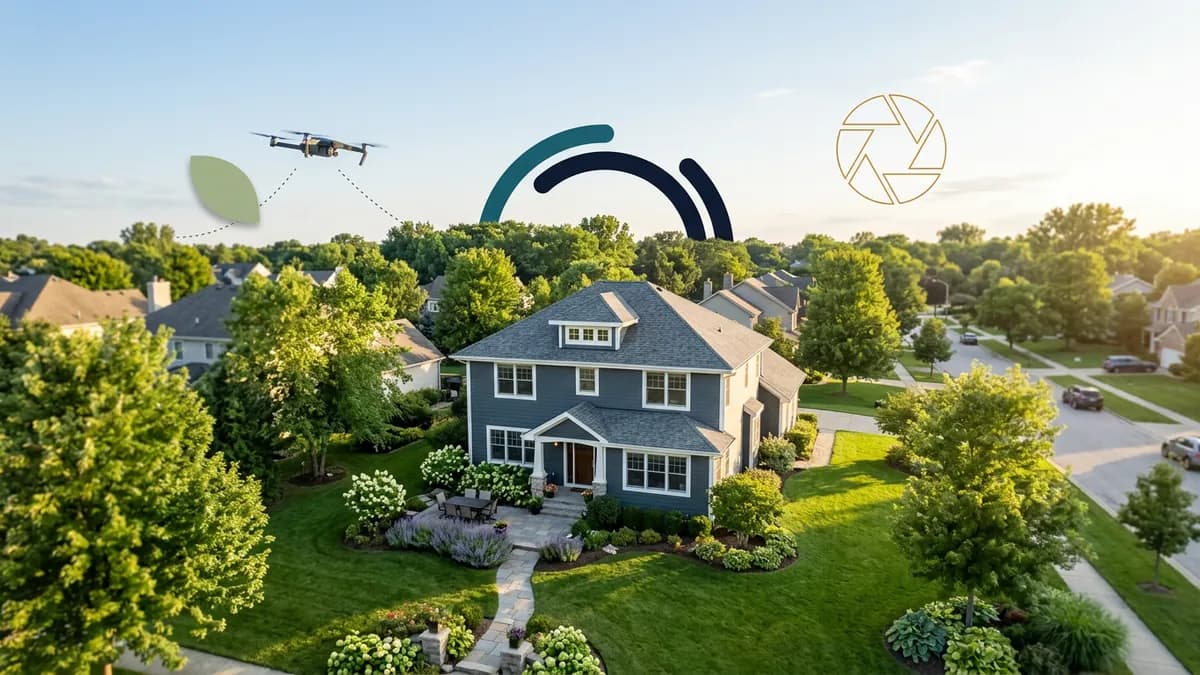
Drone footage is video shot from the air by a small unmanned aircraft. For a listing, it shows what the ground cannot: the full lot, the roofline, the distance to the water, the street layout and the nearby parks or shops.
Buyers search from their phones. Aerial clips give them context in seconds. A high shot tells them how big the yard is. A slow push toward the entrance tells them how the home sits on the land.
What do aerial shots show that ground photos miss?
Lot size and shape, privacy from neighbors, roof condition, pool and garden layout, and the walk to nearby places. These are the questions buyers ask first. They are also hard to answer with interior photos.
When is a drone not worth it?
A condo with no outdoor space gains little. A dense street with power lines and tall trees may leave nowhere safe to fly. In those cases, spend the effort on strong interiors and a clean edit instead.
What drone shots work best for real estate listings?
See it done with your own listing
Upload a few photos and let AI stage the room, cut the video, and voice it — start for $5, 500 studio credits, no subscription.
Plan five to eight clips. Each one should answer a buyer question. More clips do not mean a better video, because every extra clip makes the edit longer and the story weaker.
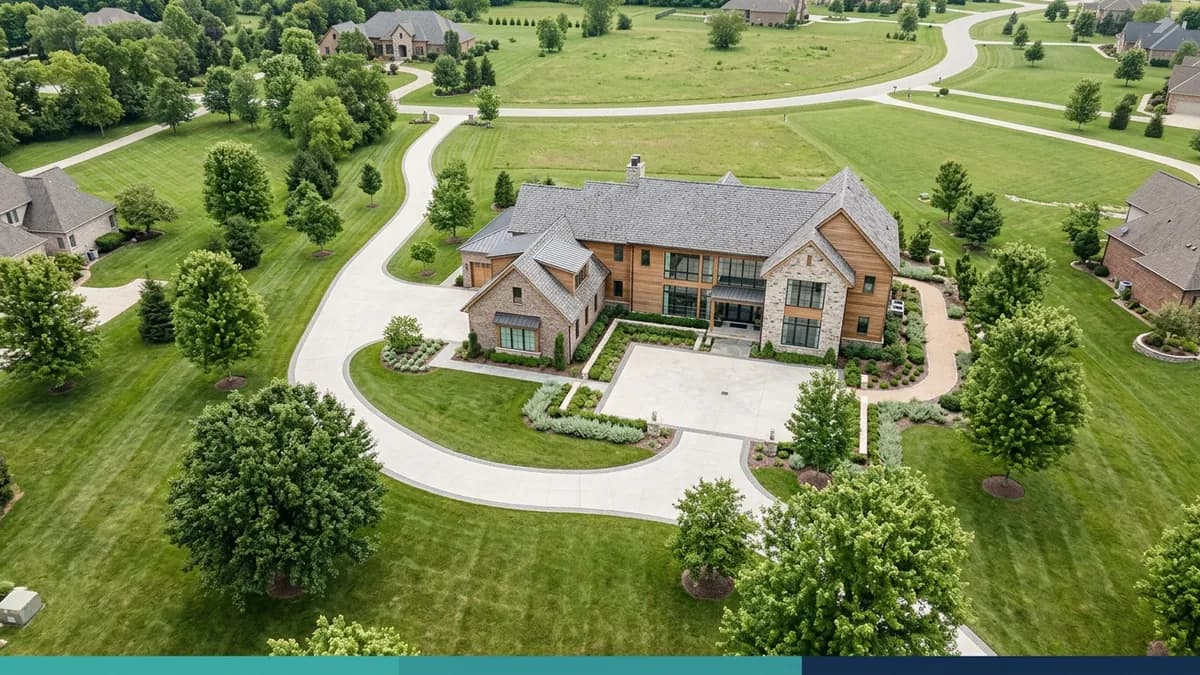
The core shot list
- The high reveal. A wide, high view of the home and the full lot. This is your opener.
- The slow push-in. The drone moves toward the front entrance at a steady speed. It leads the eye to the door and cuts well into an interior shot.
- The rise. The camera lifts over the roofline and shows the yard or the view behind the home.
- The side orbit. A gentle arc around the house shows its shape. Keep it slow, or it feels like a thrill ride instead of a tour.
- The neighborhood. One or two clips that place the home near a park, a school, a beach or a main road.
- The feature shot. A pool, a large terrace, a garden, a barn or a view that sets this listing apart.
How to shoot them well
Fly at a steady speed and change height in smooth lines. Shoot in the best light you can get. Early morning or the hour before sunset gives soft shadows and warm color. Midday sun flattens a roof and makes the grass look harsh.
Record each move for longer than you need. You can trim later, but you cannot add seconds that were never filmed. Shoot a still frame or two from the same spot, since a good aerial photo is useful for listing sites and social posts.
Which drone is best for real estate photography?
There is no single winner, and models change fast. Look for features instead. A stable gimbal keeps the picture smooth. 4K video gives the editor room to crop. Obstacle avoidance helps around trees and roofs. Longer battery life means fewer swaps on site. Read recent reviews and the maker's specs before you buy, and match the drone to the work you do most.
What are the rules for using a drone in real estate?
Rules differ by country, and they change. Treat this section as a checklist of questions, not legal advice. Your local aviation authority has the final word.
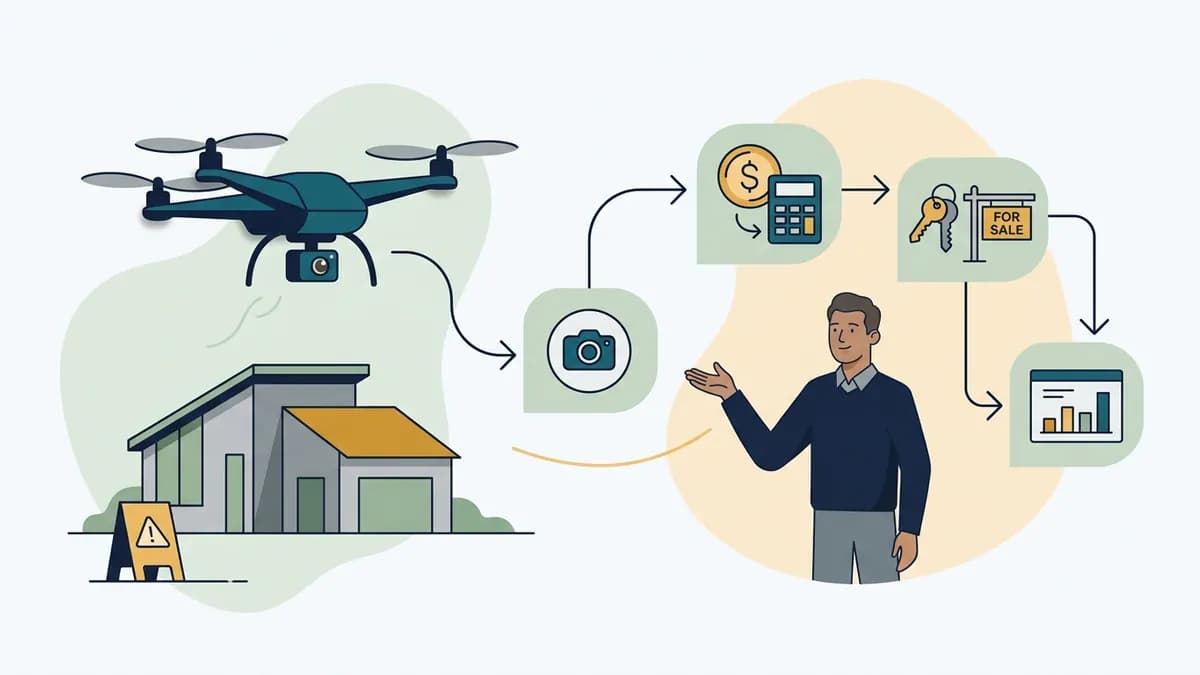
What does the FAA require in the United States?
The FAA says that to fly a drone under its Small UAS Rule (Part 107) you must obtain a Remote Pilot Certificate. To earn it, you must be at least 16 years old, pass the aeronautical knowledge test, and complete an application. The certificate also needs online recurrent training every 24 calendar months. You can read the steps on the FAA's page for becoming a certificated remote pilot.
Flying to market a listing is work, not a hobby. If you are unsure which path applies to you, ask the FAA or a certified pilot before you fly.
What else should you check before takeoff?
- Airspace. Some areas near airports or other sites have restrictions. Check a current airspace map for the exact address.
- Local rules. Cities, parks and private communities may add their own limits.
- People and privacy. Do not fly over neighbors' yards or crowds. Tell the seller what you plan to film.
- Weather. Wind, rain and low visibility are good reasons to reschedule.
- Insurance. Ask your insurer or your pilot's insurer what is covered.
Outside the United States, the process and the vocabulary are different. Look up the rules for your own country before you book a shoot.
How much does drone footage for real estate listings cost?
Nobody can give you one honest number, so be careful with any article that does. Prices depend on your market, the property and what you ask the pilot to deliver. The sections below show what moves the price.
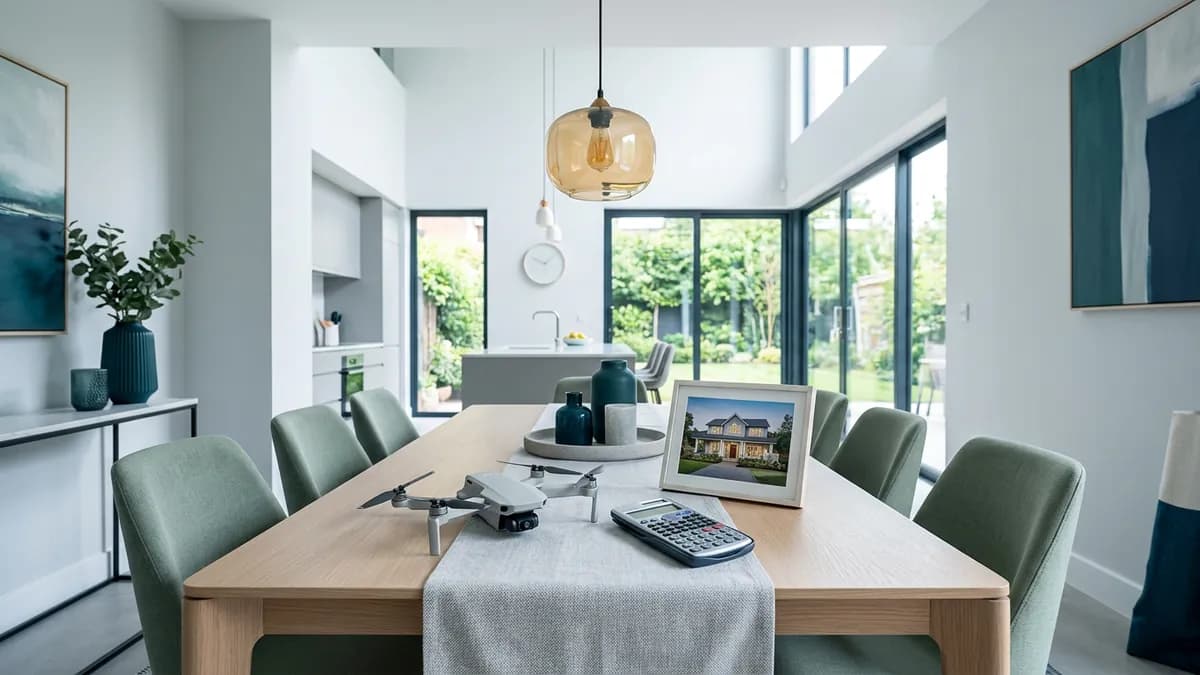
What factors influence the cost of real estate drone photography?
- Your market. Rates in a large city differ from those in a small town.
- Property size and number of locations. A large lot with several areas takes more time.
- Raw clips or an edited video. Raw files cost less than a finished, edited piece.
- Stills, video or both. Many pilots bundle them.
- Turnaround. Rush delivery usually costs more.
- Rights. Ask who owns the files and how you may use them on social media, your website and listing sites.
How much do realtors pay, and what is the average?
It varies too much for a national average to help. The best move is to ask two or three local pilots for written quotes for the same property. Compare what each one includes, not only the total.
What should a quote include?
Ask for the number of clips and stills, the file format and resolution, the delivery date, what happens if weather cancels the flight, and the license for the files. Written terms avoid surprises later.
Should you hire a pilot or shoot your own drone footage?
This is a business choice. Think about volume, risk and your time.
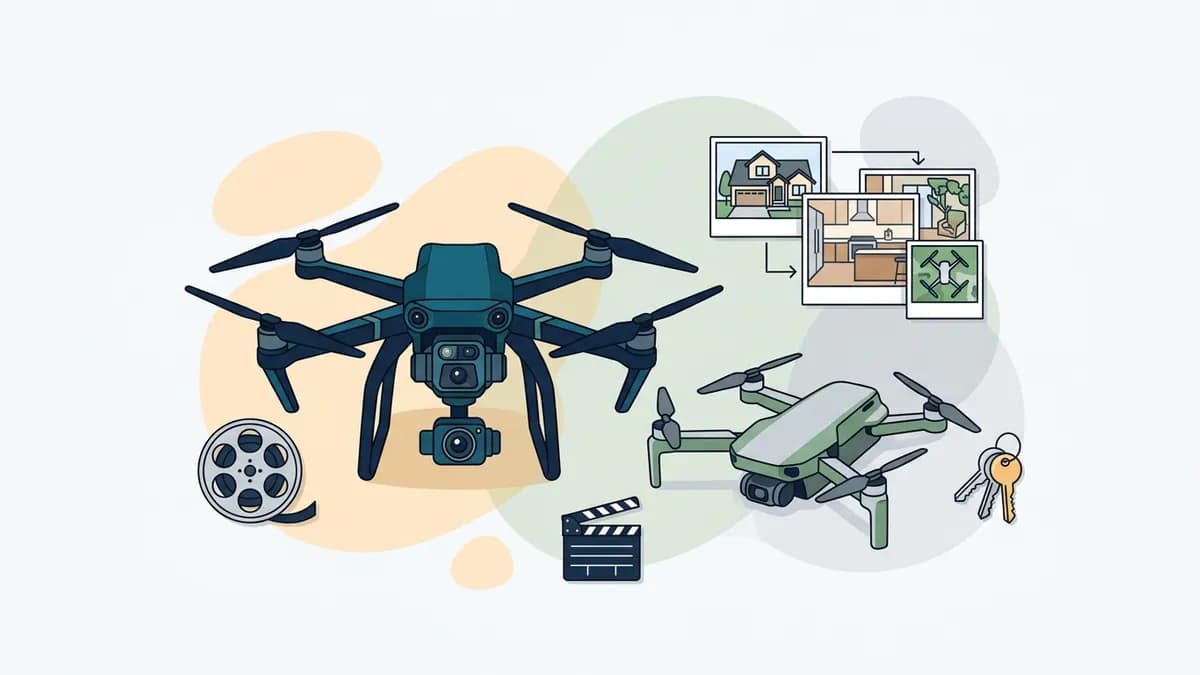
When does hiring a pilot make sense?
Hire a pilot when you have no certificate, when the airspace is tricky, or when the listing is high value and the footage must be flawless. A good pilot also knows the local rules and brings insurance. For a listing that matters, that peace of mind is worth a lot.
When does flying it yourself make sense?
Flying yourself can work if you hold the right certificate, list often and want control over timing. You will also need to buy a drone, practice, keep batteries charged and learn basic editing. Count that time as a cost.
A middle path
Some agents hire a pilot for the signature shots and add their own phone clips for rooms and details. This keeps the aerial work safe and the interiors personal. Whichever route you pick, write the shot list first, so you only pay for what the video uses.
How do you turn drone clips and stills into one listing video?
A pile of clips is not a video. Treat the drone footage as the opening and the closing, with interiors in the middle. Our guide to real estate video editing goes deeper on the cuts, and the listing video marketing guide covers the strategy around it.
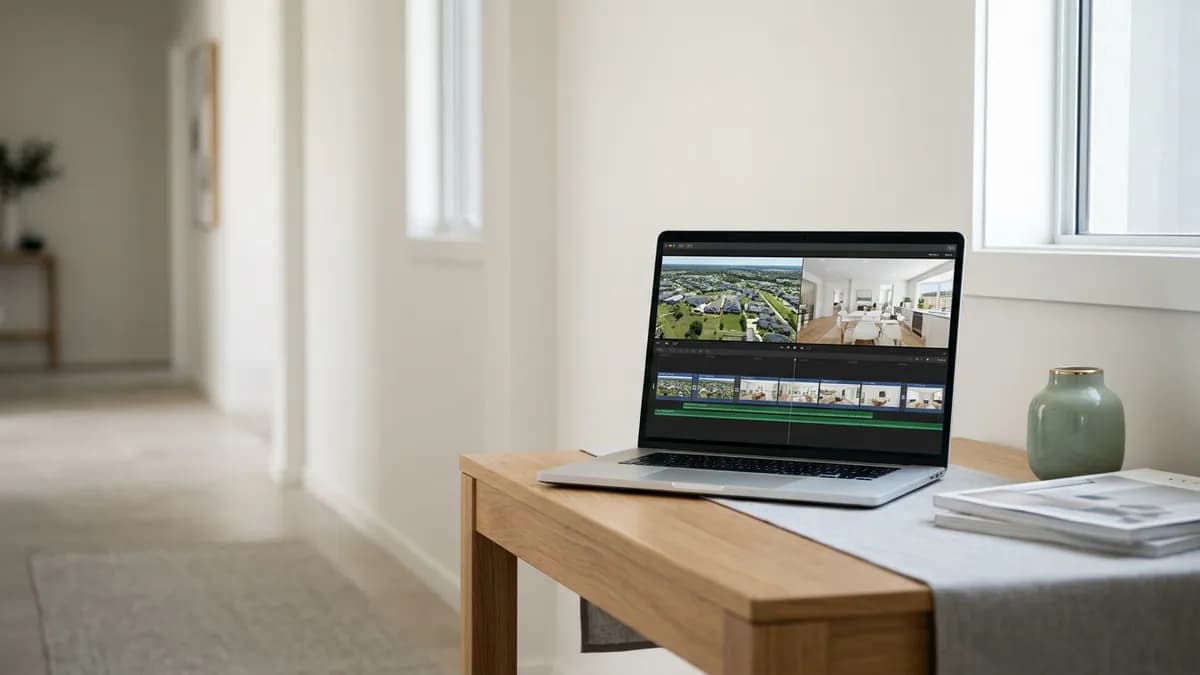
Step 1: Pick the best clips
Choose your strongest high reveal and your best push-in. Cut shaky starts, tilted horizons and any clip that repeats another. Aim for roughly five to ten seconds per aerial clip, and keep the total aerial time to a small share of the video.
Step 2: Order the story
Open with the high reveal. Cut to the push-in toward the entrance, then move indoors and follow the path a buyer would walk. Return to the air for one closing shot of the view or the neighborhood. If you only need a quick teaser, use the reveal and the best interior detail.
Step 3: Match the look
Drone sensors often record cooler light than the camera used indoors. Adjust the white balance so the sky and the living room feel like the same day. A consistent look makes the move from outside to inside feel smooth.
Step 4: Add voiceover and music
Aerial footage looks good with a short script that names the lot, the view and the main features. Property tour script templates help you write it fast. Keep the music low enough that the voice stays clear, and use tracks you have the right to use. Our music guide for real estate videos covers tempo and genre.
Step 5: Add captions and pick the shape
Many people watch with the sound off, so add captions. For Reels, Shorts and TikTok, export vertical 9:16. For your website and long-form uploads, use 16:9. The piece on vertical video for realtors explains how to frame aerial shots for a tall screen.
How can ReelEstate help you finish the video?
ReelEstate does not fly drones or capture footage. It assembles what you already have into a finished listing video. You bring the aerial clips and stills, and the timeline lets you drag them into order, trim them and adjust their speed.
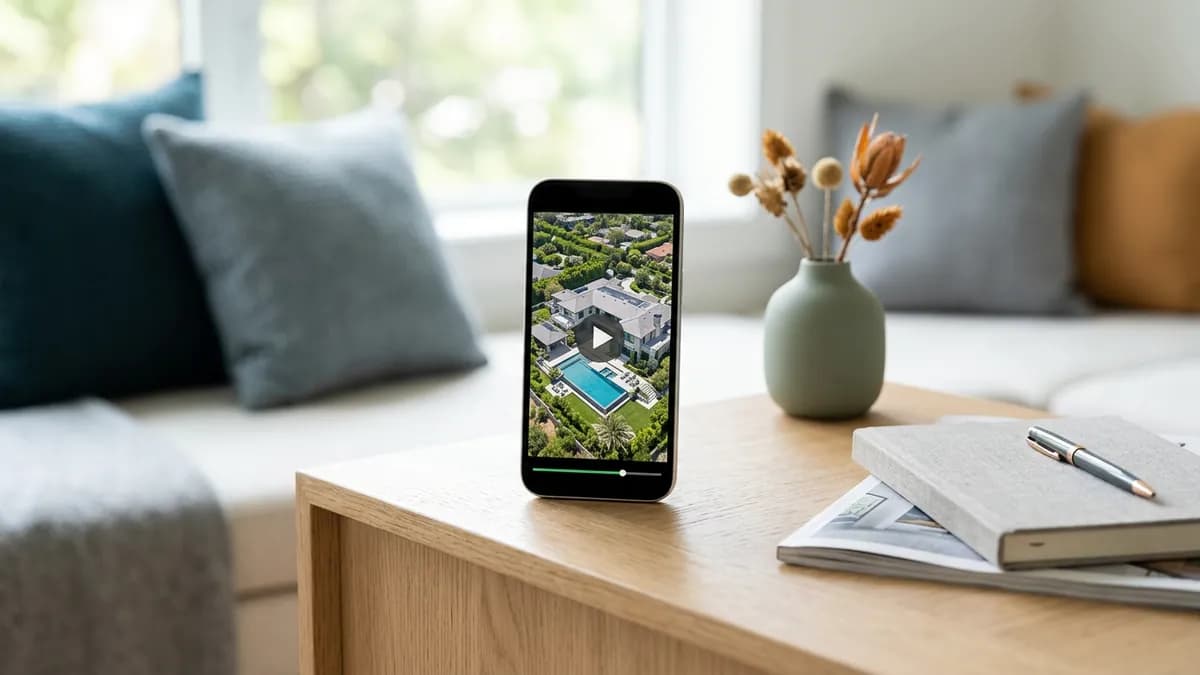
From there you can add a voiceover in one of 16 voices and 15 languages, generate captions that highlight each word as it is spoken, add original background music, and close with a branded outro card that carries your logo and contact details. The live preview matches the export, so you see the video as it will play.
If you would rather skip recording your own voice, a generated narration reads your script for you. When you are ready to turn drone clips and listing photos into one branded video, check out how ReelEstate gives you a polished video ready to post in under 10 minutes.
Frequently Asked Questions
How much do realtors pay for drone footage?
There is no single price. It depends on your market, the size of the property, whether you get raw clips or an edited video, and the licensing terms. Many pilots sell packages that bundle stills and video. Ask two or three local pilots for written quotes, and confirm what is included before you book.
What is the average cost of drone footage for a house?
Averages are hard to trust because rates differ so much from one area to the next. Rush delivery, large lots, extra locations and editing usually raise the price. A quick local quote is more useful than any national figure.
Can I use a drone for real estate?
Often yes, but the rules depend on your country and sometimes your city. In the United States, flying under the FAA's Small UAS Rule (Part 107) requires a Remote Pilot Certificate. Many agents hire a certified pilot instead. Check your local aviation authority and any local limits before you fly. This is not legal advice.
What drone shots work best for real estate listings?
Start with a high, wide reveal of the home and lot, then add a slow push toward the front door, a rising shot over the roofline, and a few clips that show the neighborhood, such as a park, a school or a main road. Keep every clip steady and short.
Should I hire a drone pilot or shoot it myself?
Hire a pilot when the property is high value, the airspace is tricky or you have no certificate. Shoot it yourself when you hold the right certificate, fly often and the listing is simple. Either way, plan the shots first so you only pay for, or fly, what the video needs.